
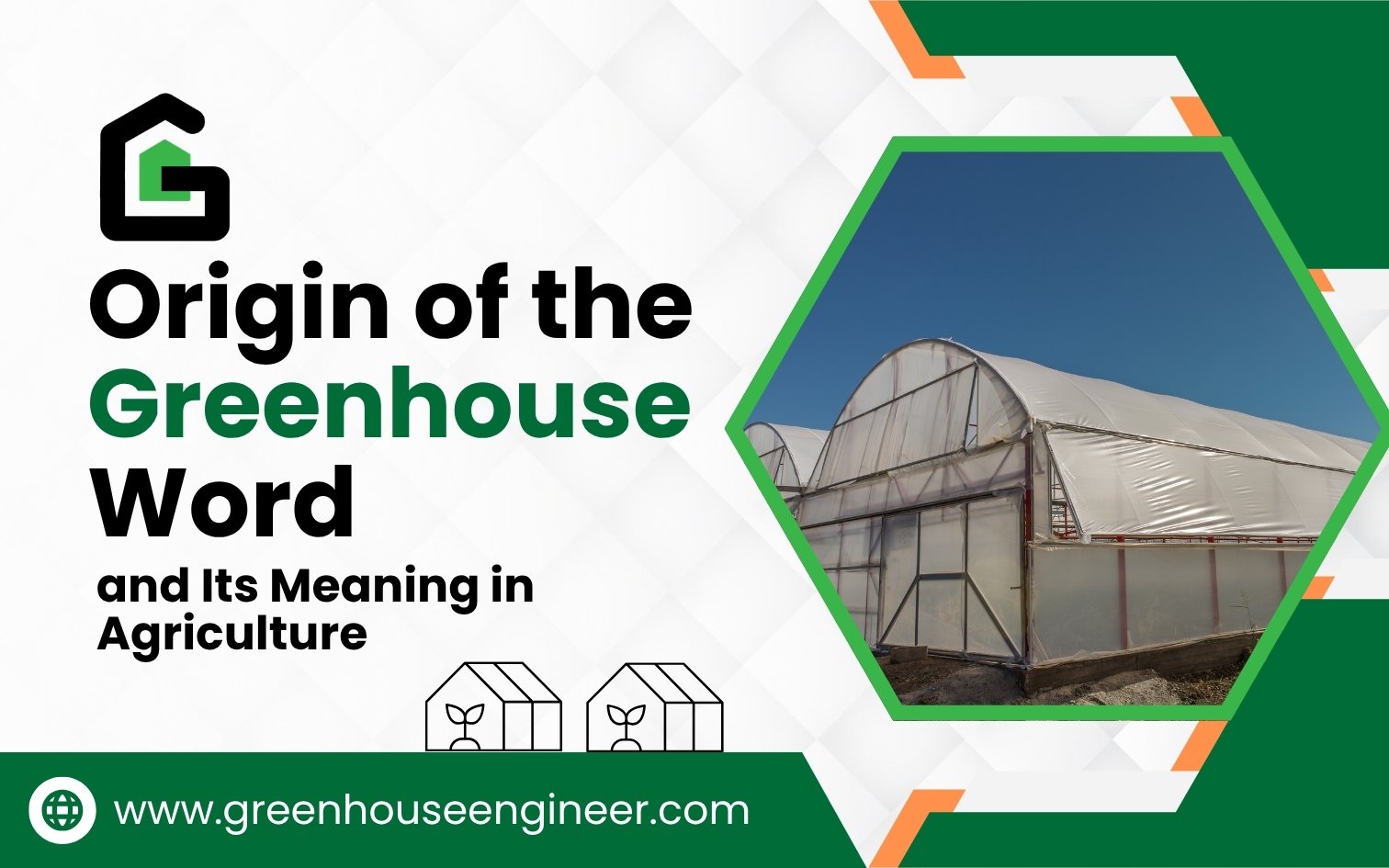
Origin of the Greenhouse Word and Its Meaning in Agriculture
The greenhouse is one of the most significant innovations in modern agriculture, enabling farmers and growers to cultivate crops in a controlled environment throughout the year. From vegetable production to floriculture and nursery management, greenhouse technology has transformed the way crops are grown. Understanding the origin of the word “greenhouse” provides valuable insight into the history and evolution of protected cultivation in agriculture.
What Does the Word Greenhouse Mean?
The term Greenhouse is derived from two simple words:
• Green – representing plants, crops, and vegetation.
• House – referring to a building or enclosed structure.
Together, the word means a structure designed for growing and protecting green plants. In agriculture, a greenhouse serves as a controlled environment where crops can thrive regardless of external weather conditions.
Historical Origin of the Greenhouse Word
The concept of greenhouse cultivation dates back thousands of years. Ancient civilizations experimented with methods to protect plants from harsh climates and extend growing seasons. However, the modern greenhouse as we know it today began to emerge in Europe during the 17th and 18th centuries.
During this period, wealthy landowners and botanists constructed glass-covered structures to grow exotic plants imported from warmer regions. These early structures allowed plants to survive in climates that would otherwise be unsuitable for their growth.
As the use of these structures expanded, the term Greenhouse became popular because it accurately described a “house” dedicated to growing “green” plants.
Other Names Used Before Greenhouse
Before the word greenhouse became widely accepted, several other terms were used, including:
• Glasshouse
• Conservatory
• Hothouse
• Orangery
The term “glasshouse” was common because early structures were primarily made of glass. Over time, however, the focus shifted from the construction material to the purpose of the structure, leading to the widespread adoption of the word greenhouse.
How Greenhouses Support Agriculture
A greenhouse works by allowing sunlight to enter through transparent covering materials such as glass, polyethylene film, or polycarbonate sheets. The enclosed structure traps heat and creates a favorable environment for plant growth.
In modern agriculture, greenhouses help control:
• Temperature
• Humidity
• Ventilation
• Irrigation
• Light Levels
• Nutrient Management
This controlled environment allows farmers to produce crops more efficiently and consistently throughout the year.
Evolution of Greenhouse Technology in Agriculture
Greenhouse technology has advanced considerably over the years. What began as simple glass-covered structures has evolved into highly sophisticated agricultural systems.
Modern greenhouse facilities may include:
• Automated Climate Control Systems
• Drip Irrigation and Fertigation Systems
• Cooling and Heating Equipment
• Insect-Proof Netting
• Hydroponic Cultivation Systems
• Smart Monitoring and Automation Technologies
These innovations have made greenhouse farming an important part of commercial agriculture worldwide.
Importance of Greenhouses in Modern Agriculture
Greenhouses play a vital role in agriculture by helping farmers overcome environmental challenges and improve productivity. They provide protection against adverse weather conditions such as excessive rainfall, strong winds, frost, and extreme temperatures.
Key benefits of greenhouse agriculture include:
• Higher Crop Productivity
• Improved Crop Quality
• Efficient Water Usage
• Reduced Pest and Disease Pressure
• Extended Growing Seasons
• Better Resource Management
• Year-Round Crop Production
As a result, greenhouse cultivation has become an essential tool for sustainable and profitable agriculture.
Greenhouse Crops in Agriculture
Today, greenhouses are widely used in agriculture for cultivating various high-value crops, including:
• Tomatoes
• Cucumbers
• Capsicum
• Leafy Vegetables
• Strawberries
• Roses
• Gerbera Flowers
• Herbs and Medicinal Plants
The ability to create ideal growing conditions makes greenhouse agriculture an attractive solution for farmers seeking higher yields and better crop quality.
Greenhouse and the Future of Agriculture
As global demand for food continues to increase, greenhouse technology is expected to play an even greater role in agriculture. Advances in automation, climate control, and precision farming are making greenhouse cultivation more efficient and sustainable. The greenhouse has evolved from a simple structure for protecting plants into a key component of modern agriculture, helping farmers produce more with greater reliability and resource efficiency.
Tags:
Subscribe To Get Update Latest Blog Post



Leave Your Comment: